


918Kiss FAQs, Fair Play & Responsible Gaming — Pirate777 Trust Guide
918Kiss publishes no independent laboratory certification, and we have found no public record for it. That is the honest starting point of this page. It does not mean the games are rigged — it means the assurance available for a 918Kiss title is the studio’s own word rather than a third party’s, and you deserve to know which of the two you are getting. Several studios Pirate777 carries do hold records you can check yourself, and this page shows you how to check one.
Most “fair play” articles for slot games stop at “the games are certified”. This guide goes a layer deeper: what random number generator certification actually proves, how to verify a studio’s record yourself, what certification does not cover, what to do if you think an outcome was wrong, and the full set of responsible gaming tools Pirate777 makes available to Malaysian players — including the three most people never hear about.
Table of Contents
- Is 918Kiss rigged, and does anyone independent check?
- What does RNG certification actually prove?
- How to verify a studio’s record yourself
- How is a slot’s fairness actually tested?
- Long-run fairness versus a single session — why they differ
- Does it matter whether you play in the browser or the app?
- What independent certification does NOT cover
- If you think an outcome was wrong: how to raise a dispute
- Responsible gaming tools on Pirate777
- Self-exclusion and cool-off periods
- Where to get help if you need it
- Frequently asked questions
Is 918Kiss rigged, and does anyone independent check?
We have no evidence that 918Kiss games are rigged, and we are not going to tell you they are certified, because as far as we can establish they are not. 918Kiss publishes no laboratory certificate and holds no public record we can point you at. What exists is the studio’s own declaration of how its games behave — which is a weaker form of assurance than a third-party audit, and saying so is more useful to you than a badge we cannot stand behind.
That puts 918Kiss in the same position as most of the app-distributed studios in this market, and in a different position from several studios Pirate777 also carries. Playtech and Fa Chai hold records you can open and read in a few seconds — we link both below. If a verifiable third-party audit is what you want before you stake money, play a studio that has one. If you want to play 918Kiss, play it knowing exactly what backs it.
The rest of this page is about the difference between those two things: what a certificate proves when a title carries one, what it never proves, and what protects you regardless of which studio you pick.
What does RNG certification actually prove?

Random Number Generator certification — the kind that BMM Testlabs, iTech Labs, and GLI issue for slot titles — is a narrow, specific verification. Where a title carries it, it proves three things:
- The mathematical RNG behind the game produces outcomes that are statistically random (not biased toward house or player).
- The published return-to-player percentage matches the actual long-term outcome distribution.
- The bonus mechanics trigger at the rates the provider declares.
That’s the entire scope. RNG certification does not extend beyond the game’s mathematical fairness. Any platform claiming a “certified secure platform” or “certified fair operator” is using the certification mark for something it wasn’t issued for.
How to verify a studio’s record yourself
The three labs most often referenced for slot RNG testing are independent and well-established:
- BMM Testlabs — global testing lab, decades of presence in the gaming testing space.
- iTech Labs — Australian-headquartered, audits RNG-based games for major operators worldwide.
- GLI (Gaming Laboratories International) — operates globally, used by regulators across multiple jurisdictions.
Naming a lab proves nothing on its own, so here is the part most pages leave out — how you check a record without taking anyone’s word for it. A real record is public, names the company, and opens in one click:
- Playtech — holds UK Gambling Commission account 38516 on the regulator’s public register. Open it and you see the company, the status and the date.
- Fa Chai — holds GLI certificate 573, which states its own scope and validity.
- Pragmatic Play — UK Gambling Commission account 56015.
Now do the same for 918Kiss and you will find nothing, because there is nothing to find: 918Kiss publishes no laboratory certificate and appears on no public register we can locate. That is the check working correctly, not failing. A studio with a record can be verified in seconds; a studio without one cannot be verified at all, and no amount of “certified fair” wording on a slot site changes that. The certification, where it exists, is on the game engine and is issued to the studio — never to Pirate777, and never to a platform.
If this is the deciding factor for you, the 918Kiss beginner guide lists what the studio does publish about its own games.
How is a slot’s fairness actually tested?
The audit process isn’t black-box mystery work. The high-level steps:
- The game provider submits the title’s source code (specifically the RNG and the prize-allocation logic) to the lab.
- The lab runs millions of simulated spins to confirm the actual outcome distribution matches the declared mathematical model.
- The lab confirms the RNG passes the standard statistical randomness tests (chi-squared, runs tests, and similar).
- If the title passes, the lab issues a certificate. If it fails, the provider has to fix the issue and re-submit.
This process re-runs when the provider materially updates the game’s mechanics. It’s not a one-time stamp — title updates that touch the math get re-certified.
Long-run fairness versus a single session — why they differ
This is where most arguments about rigged slots actually come from, and it is worth separating carefully, because the two things sound like the same claim and are not.
A certificate, where a title has one, says that across millions of spins the outcomes match the published mathematical model. That model has a house edge built into it — that is what a slot is. So “provably fair” and “you will probably lose over time” are both true at once, and neither contradicts the other. Over a single evening, variance dominates completely: a fair game can hand you a long losing run or a large win, and neither is evidence about the software.
The practical consequence is that a bad session is not proof of anything, and a good one is not either. If you want to know whether a game is behaving, the evidence is the published model and the record behind it — not last night. And if a session is going badly, the tools further down this page exist for exactly that moment, which is a better response than trying to read fairness out of the last twenty spins.
Does it matter whether you play in the browser or the app?
For fairness, no — and it is worth saying because it is the one part of this people can control and often worry about. Game outcomes are computed on the studio’s side and logged there, whichever route you took to reach the game. 918Kiss is one of only two studios on Pirate777 that offer an app at all, and the only one of those two you can also play straight in your phone browser as 918Kiss H5, with nothing to install. Mega888 is the one provider with no browser route.
Both routes sign in to the same Pirate777 wallet and reach the same titles, and the responsible gaming limits below apply identically to both — the limit is held on the platform side, so it cannot be sidestepped by switching. Where the route does matter is security rather than fairness: an app taken from anywhere except our own download page is the single largest risk in this market, which the 918Kiss install guide covers in full.
What independent certification does NOT cover
This is the part most operators omit. Honest disclosure here is part of why we wrote this guide. Independent RNG certification, where a title carries it, does NOT cover:
- Payment processing — deposits and withdrawals are platform operations, separate from game certification.
- Customer support quality — Captain’s Support is a Pirate777 operation, not a certified function.
- Account security — identity checks, login security, and account access are platform responsibilities.
- Promotional terms — bonus structures, wagering requirements, and rebate programs are not certified.
- Specific outcomes you experience — the certification proves long-run statistical fairness, not that any individual session will go a certain way.
If something else on a slot site is claimed to be “certified” beyond RNG fairness, the certification mark is being misused.
If you think an outcome was wrong: how to raise a dispute
Because outcomes are computed and logged on the studio’s side, a disputed hand or spin is checkable — it is not your memory against ours. The route:
- Note what you can before it fades — the title, the approximate time, the stake, and what you expected to happen instead. A screenshot helps and is worth taking at the moment, not later.
- Contact Captain’s Support on Telegram or Live Chat, both staffed 24/7, and say plainly that you are disputing a specific outcome rather than asking a general question.
- Ask for the session log to be checked against the studio’s record. That is the actual evidence, and it is the thing to ask for by name.
- If money is missing rather than an outcome disputed — a withdrawal that has not arrived, a balance that looks wrong — that is a different problem with a different route, set out in the 918Kiss emergency help guide.
One thing we will not pretend: we distribute these games, we do not compute their outcomes, and on a studio with no public record there is no third party above us to appeal to. The session log is the evidence that exists. Knowing that before you need it is part of deciding how much to stake.
Responsible gaming tools on Pirate777
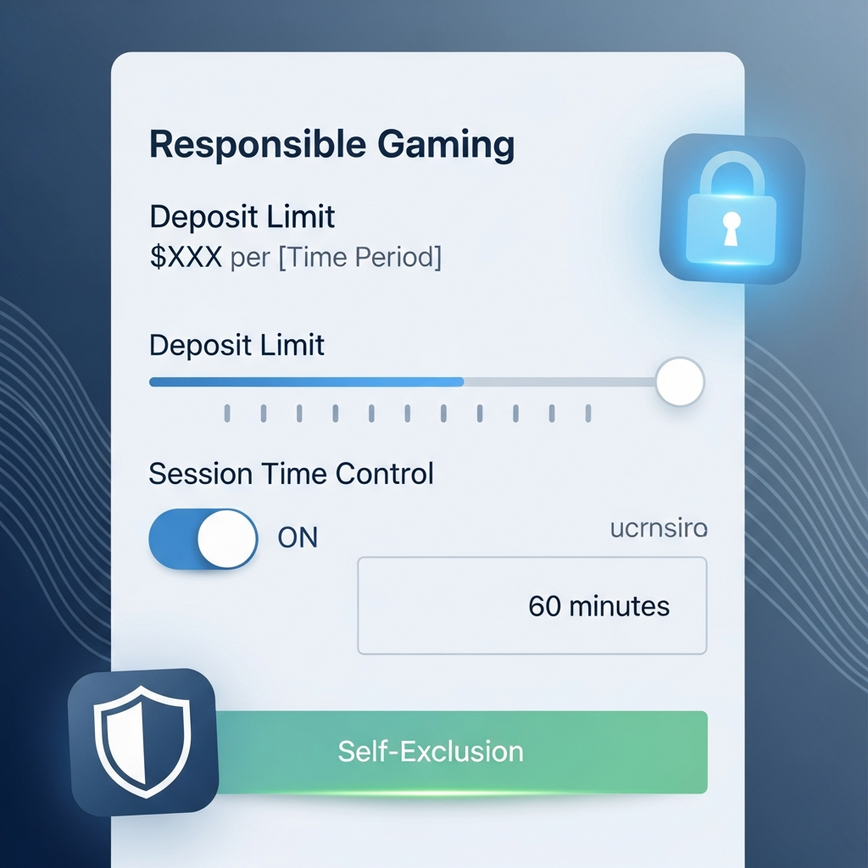
There are seven, they apply to 918Kiss exactly as they apply to every other studio here, and three of them are the ones almost nobody hears about — loss limits, wagering limits and the reality check. Every figure in this table is read off our own responsible gaming policy:
| Tool | What it does | The options |
|---|---|---|
| Deposit limit | Caps what you can pay in over a period | Daily, weekly or monthly |
| Loss limit | Caps what you can lose over a period | 24 hours, 7 days or 30 days |
| Wagering limit | Caps the total you can stake over a period | A period you choose |
| Reality check | A notice while you are playing: how long you have played, total wagered, net win or loss | Every 15 minutes, 30 minutes, 1 hour or 2 hours |
| Session time limit | Logs you out at the limit and requires a break before you resume | 1, 2, 4 or 8 hours |
| Cool-off | Blocks deposits, bets and promotional messages; the account reopens on its own | 24 hours, 7 days or 30 days |
| Self-exclusion | Locks the account, blocks new accounts opened on your details, removes you from all marketing | 6 months, 1 year, or permanent |
Three rules apply to all of them, and the third is the one worth knowing before you set anything. A limit takes effect immediately. Lowering a limit is instant. Raising one carries a 24-hour wait — deliberately, so the decision cannot be made in the middle of a losing session.
None of these is an in-app toggle. You ask the 24/7 Captain’s Support team and they apply it to your account, as our responsible gaming policy sets out. The 918Kiss app has no “deposit limit” button of its own; the limit is held on the Pirate777 side and the app respects whatever is in force.
A reality check is the one worth setting first if you set only one. It does nothing except tell you the truth at an interval you choose — how long you have been playing, what you have staked in total, and whether you are up or down — which is precisely the information that stops being available to you once a session has its own momentum.
Self-exclusion and cool-off periods
These two are the heavier end of the list, and they work differently from each other in a way worth being precise about before you pick one.
A cool-off is a pause. Choose 24 hours, 7 days or 30 days. Deposits, bets and promotional messages stop for that period, and the account reopens on its own when it expires — you do not have to ask, and nobody will ask you why.
Self-exclusion is not a pause. The periods are 6 months, 1 year, or permanent. The account is locked immediately, you are removed from every marketing channel, and our system blocks attempts to open a new account on your details. Any pending withdrawal is processed first — we do not hold your money while you are excluded.
The part to read twice: a permanent self-exclusion cannot be reversed. Not by asking, not later, not under any circumstances. That is what makes it worth something, and it is why it should be a considered choice rather than a reaction to one bad night — a 30-day cool-off exists for that. For the fixed periods, reopening is possible but deliberately slow: after the 6 months or the year has elapsed you contact support, confirm your identity, and a further 24-hour deliberation period applies before the account reopens.
To start either one, contact Captain’s Support. For self-exclusion they will ask you to confirm the period and your identity, and you will have written confirmation within 24 hours. If you are not sure which is right for you, say so — asking for a conversation rather than a decision is a legitimate way to start it.
Where to get help if you need it
If gambling stops being entertainment, the most useful help is the kind that has nothing to do with us. In Malaysia, two services take calls directly and neither is connected to the gaming industry:
- Befrienders Kuala Lumpur — +603-7627 2929, 24 hours a day, every day. Confidential emotional support for distress of any kind, including gambling.
- MIASA crisis helpline — 1-800-18-0066. Malaysia’s leading mental-health support non-profit.
Internationally, BeGambleAware and GamCare publish free, confidential guidance and self-assessment tools you can read without speaking to anyone. And talking to someone outside the platform — a friend, family, a counsellor — does more than any tool on this page when a pattern has become hard to break alone.
Within Pirate777, Captain’s Support can apply the cool-off and self-exclusion tools above and is the right first contact point if you want to put structural friction between yourself and the next session.
— Pirate777 Team. We verify our observations against each studio’s own published game data and, where a studio holds one, its licence record on the regulator’s public register.
Frequently asked questions
No. 918Kiss publishes no laboratory certificate and appears on no public register we can locate, so the assurance available for a 918Kiss title is the studio’s own rather than a third party’s. Several studios Pirate777 carries do hold checkable records — Playtech on the UK Gambling Commission register, Fa Chai with GLI — and this page links both so you can see what a real record looks like.
It depends which one you chose. A 6-month or 1-year exclusion can be lifted after the period has elapsed: you contact Captain’s Support, confirm your identity, and a further 24-hour deliberation period applies. A permanent self-exclusion cannot be reversed under any circumstances — that is the point of it. If you want a break rather than an ending, choose a cool-off of 24 hours, 7 days or 30 days instead; those reopen on their own.
RNG certification proves the game’s outcomes match the published mathematical model in the long run. The model itself includes a house edge — that’s how slots work. Over millions of spins, the published RTP holds; over a single session, anything can happen, and most sessions will be net negative because of the house edge. This is not a fairness problem; it’s the design of the product.
Certifications are tied to specific game versions. When a provider releases a material update to the game’s math, that version goes through re-certification. Certificates don’t “expire” on a fixed timer — they cover the version they were issued for.
The labs make their certification scope publicly visible. Game providers typically reference their certifications on their corporate sites. If a specific title’s certification is important to your decision, the provider’s own documentation is the most direct source.
Game outcomes are computed on the provider’s side and logged there — not on Pirate777’s side and not on your device. The platform’s role is wallet management, distribution, and support. The outcome itself is provider-computed. Disputed outcomes can be checked against the provider’s session log via Captain’s Support.
Tell Captain’s Support the figure and the window — daily, weekly or monthly — and they will apply it to your account. It takes effect immediately. Lowering it again later is instant; raising it carries a 24-hour wait, deliberately, so it cannot be done in the middle of a losing session. If a deposit cap is not quite the tool you want, a loss limit caps what you can lose rather than what you can pay in, and a reality check simply tells you where you stand at an interval you choose. For the bankroll arithmetic behind a sensible figure, see the 918Kiss cost and budget guide.
Important: This platform is intended for users aged 18 and above. Please gamble responsibly and only wager what you can afford to lose.